From the Lionrush community
Verified. no paid posts.


Ethiopia · The Origin
Coffee came from here. Everything else came after.
Yirgacheffe heirloom varieties from 750 smallholders. Natural process. 2,100 meters above the sea.
Why this coffee?
Six reasons. None of them are aesthetic.


Roasted fresh.
Most coffee on a shelf is months old. Ours leaves the roastery the day it's roasted.

Tested before
we roast it.
We test our green coffee for mold and pesticides. Then we roast it.

No fluff shipping.
Order $30+ and shipping's on us. Same-day out the door.

Developed by
a biochemist.
Our founder spent more years in a lab than behind a counter. The roasts are carefully tracked.

Specialty grade only.
SCA 84+ beans only. Traceable to the farm or washing station.

Made in Miami.
Family-led roastery in Miami. The coffee that ships to you was roasted by people you can email back.

I'm a biochemist. I care about what's in the cup, so we test our green coffee for mold and pesticides before it ever reaches the roaster. We don't roast coffee to look good in photos. We roast it because it's good coffee.
Martin
Founder · Lionrush Coffee · Miami, FL
Why Ethiopia
Coffee was born here. Yirgacheffe is where it grew up.
Every coffee on every shelf in every store traces back to this part of the world. Coffee was first cultivated by humans in Ethiopia, in the Kaffa region, somewhere around the 9th century. That's where the word "coffee" comes from. Everything since is a translation.
Yirgacheffe is the region that coffee people argue about. The misty highlands. The dense vegetation. The heirloom varieties that grow nowhere else on earth in quite the same way. 750 smallholder farmers tend tiny plots shaded by enset and fruit trees. They bring their cherries in by hand, in baskets woven generations ago.
Yirgacheffe. Where coffee actually grew up.

At the Halo Beriti washing station — built in 2014 in the middle of this landscape — the coffee gets hand-sorted multiple times. At receiving. During drying. Before bagging. The cherries dry slowly on raised beds under the Ethiopian sun. The result, when it lands in your cup: peach, blueberry, honey. Notes that taste closer to fruit than to most coffee you've ever drunk.
This is what coffee tastes like at the source. Before the long chains and the bulk markets and the rebrands. Before everything that comes after.
Coffee from where coffee started. Brewed somewhere it didn't.
Region
Yirgacheffe, Ethiopia
Variety
Heirloom
Process
Natural
Altitude
1,900 – 2,400m
How to brew it?
This is a serious
gourmet sh*t!
No ceremony. No mood lighting. Just the numbers that work.


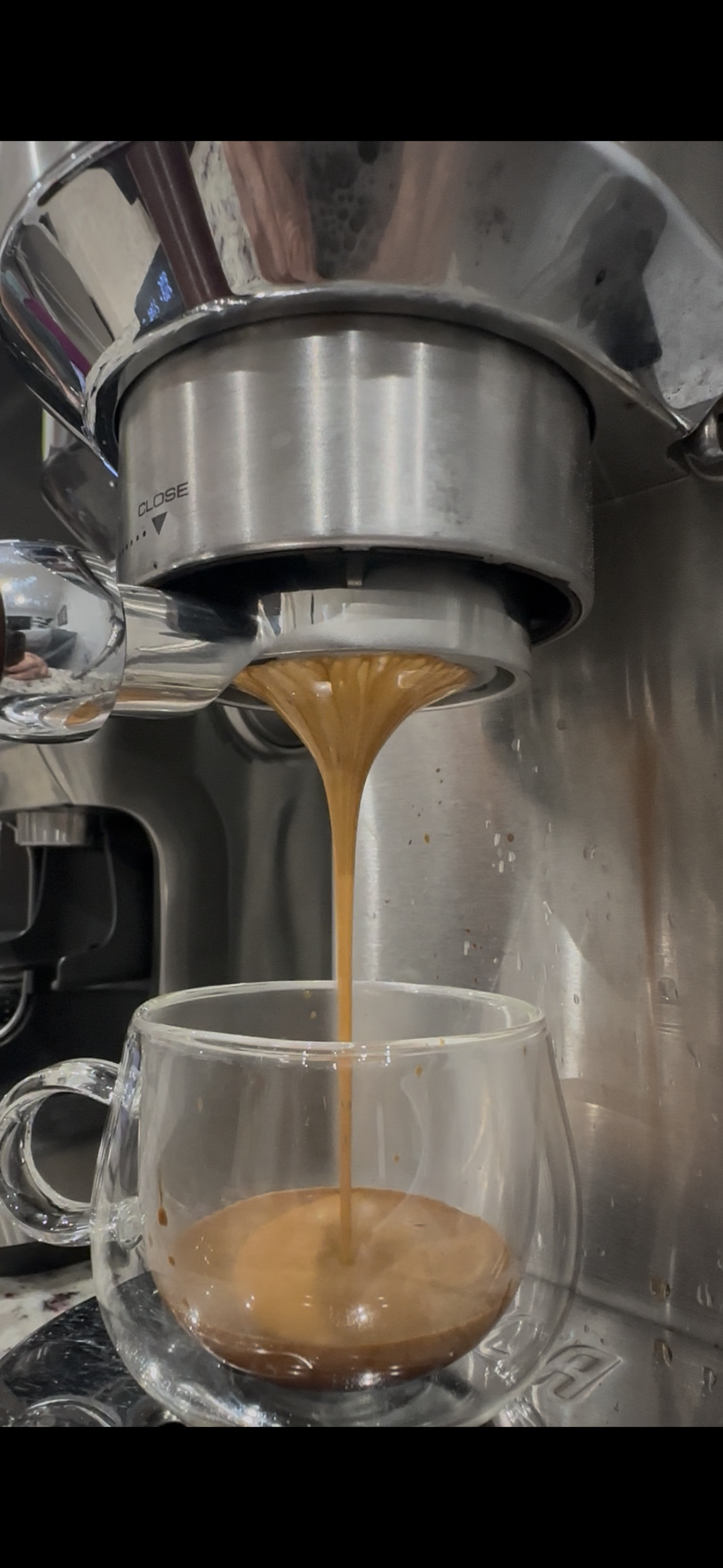
Espresso
1:2
18g in → 36g out

Moka Pot
1:7
20g coffee · 140g water
Best for this coffee


Pour Over
1:16
32g coffee · 500g water

French Press
1:14
36g coffee · 500g water
Best for this coffee


Cold Brew
1:8
100g coffee · 800g water · 12hr

Hand press
1:14
15g coffee · 220g water · 90s steep
How we check our coffee
We test the green.
Then we roast it.
Coffee is a farm product, and it travels a long way before it reaches us.
Before we roast, we test our green coffee for mold and pesticides. Questions about how we source and test? Email team@lionrushcoffee.com.
Mold
Tested
Pesticides
Tested
What the industry says. what's in the cup.
Myth:“Dark roast is just burnt coffee.”
Dark roast is a technique, not a failure. Done right, it caramelizes sugars and pushes the bean past the point where most chlorogenic acid breaks down — which is how you get the body classic espresso depends on.
Myth:“Good coffee is whatever the brand on the bag tells you it is.”
The bag is a marketing object. The bean inside it has its own truth — variety, region, altitude, process, roast date. We list those. Most brands list a story.
You can verify a fact. You can only believe a story.
Myth:“All coffee is fresh — it's shelf-stable.”
Coffee starts losing aromatics gradually after roasting. The grocery shelf doesn't print roast dates because it can't afford to. We print the roast date on every bag.
If a bag in your kitchen is more than two month old, it's not bad — it's just not as good as it was.
Myth:“Testing is overkill for coffee.”
Coffee is a farm product that goes through fermentation, drying, and a long trip by sea. Mold and pesticide residue are real possibilities. That is why we test our green coffee for both before we roast it.
Myth:“Single origin is always better than a blend.”
Single origin is a kind of coffee. Blend is a kind of coffee. "Better" is a judgment about what you're trying to do.
Espresso wants body from one bean and brightness from another, blended carefully — single origin won't do that on its own. Pour-over lovers usually want the clarity of one place. Different problems, different answers.
Myth:“Subscription coffee is a gimmick.”
Subscription coffee is logistics. You drink coffee every week, we roast it every week, the math works. Our subscription saves you 20% and ships on Mondays at your desired frequency — that's it.
No surprise products, no auto-billing tricks, no hidden up charges. Cancel any time. It's a discount, not a trap.
Roasted in Miami. shipped same day.
That's the whole story. No costumes. No brunch. No filters. Just specialty beans, roasted the day they ship.
Free shipping $30+ · 20% off subscriptions